A Mid-Year Look at the Single-Family Home Market: January — May 2026
June 2026
If you’ve been watching the Hawaiʻi Island real estate market and wondering whether now is a good time to buy or sell, the short answer is: it depends on where you’re looking — and what you’re looking for. The Big Island isn’t one market. It’s a collection of very different communities, each with its own pace, price range, and buyer pool. Here’s what the numbers from the first five months of 2026 are actually telling us.
The Big Picture
Hawaiʻi Island was one of the busiest single-family home markets in the state through the first five months of 2026. Sales volume was up significantly year-over-year — April alone saw a 22% jump compared to April 2025 — and homes were moving faster than they were a year ago. That’s a meaningful shift, and it’s being driven largely by buyers who are priced out of Oʻahu and Maui and finding real value here.
Statewide, mortgage rates were hovering around 6.36% as of mid-May (Freddie Mac) — not exactly a bargain, but the market is clearly still moving. Buyers have adjusted their expectations, and sellers who have priced their homes realistically are getting results.
The Monthly Numbers
Here’s how the single-family home market tracked month by month. The four numbers are: homes sold, median sale price, average days on market, and sale price as a percentage of original asking price (SP/LP — above 100% means homes sold over asking; below 100% means buyers got a discount).
- January: ~145 sales | Median ~$550,000 | ~35 days on market | ~98% SP/LP
- February: ~150 sales | Median ~$560,000 | ~34 days on market | ~98% SP/LP
- March: ~165 sales | Median ~$580,000 | ~33 days on market | ~97% SP/LP
- April: 187 sales | Median $590,000 | 33 days on market | ~97% SP/LP
- May: 180 sales | Median $468,000 | 29 days on market | ~97% SP/LP
Wait — why did the median price drop so much in May? It’s not because values fell. It’s because a higher share of May’s sales came from more affordable East Hawaiʻi communities like Pāhoa, Hilo, and Volcano. Pāhoa alone had 42 sales at a $375,000 median — up 62% in volume year-over-year. When lower-priced neighborhoods drive more of the month’s activity, the island-wide median goes down even if individual neighborhoods are holding steady. Always look at the neighborhood, not just the island number.
If You’re Thinking About Buying
The Big Island continues to offer some of the most accessible price points in the state — and that’s attracting a lot of attention from buyers coming from the mainland and from other islands. With homes selling in about a month and buyers generally paying close to (but slightly under) asking price, this is a balanced market that favors prepared buyers.
- Lava zones matter — a lot. Hawaiʻi Island is divided into lava hazard zones 1 through 9. Zones 1 and 2 carry the highest risk and can be very difficult or impossible to insure. This affects your ability to get a mortgage and your long-term resale options. Always check the lava zone before falling in love with a property.
- East vs. West Hawaiʻi are very different markets. Kona and Waimea on the west side tend to attract buyers looking for resort-adjacent lifestyle and higher price points. Hilo and East Hawaiʻi offer lower prices and a more local community feel. Know which one fits your life.
- Get pre-approved before you look. Even in a balanced market, well-priced homes move in about a month. Having your financing lined up means you can act when the right property comes along.
If You’re Thinking About Selling
The good news: there are active buyers in the market, volume is up, and homes are selling in about a month. The catch: buyers are paying about 97% of the original asking price on average, which means overpricing is a real risk. A home that sits too long starts to look stale, and buyers start to wonder what’s wrong with it.
The sellers doing well right now are the ones who:
- Price based on what comparable homes have actually sold for recently — not what they wish the market would pay
- Present their home well — clean, decluttered, and photographed professionally
- Are realistic about negotiation — landing at or slightly below asking is the norm right now, not an insult
The Bottom Line
Hawaiʻi Island’s single-family home market is healthy and moving in 2026. It’s not the frenzied seller’s market of 2021, and it’s not a buyer’s paradise where you can lowball freely. It’s a balanced, active market where good homes priced right are selling in about a month — and buyers who do their homework are finding real value.
The biggest mistake you can make right now — whether you’re buying or selling — is treating the whole island as one market. Your neighborhood, your lava zone, your price range, and your timing all matter. That’s where a good local agent earns their keep.
The Waimea and North Hawaii Market
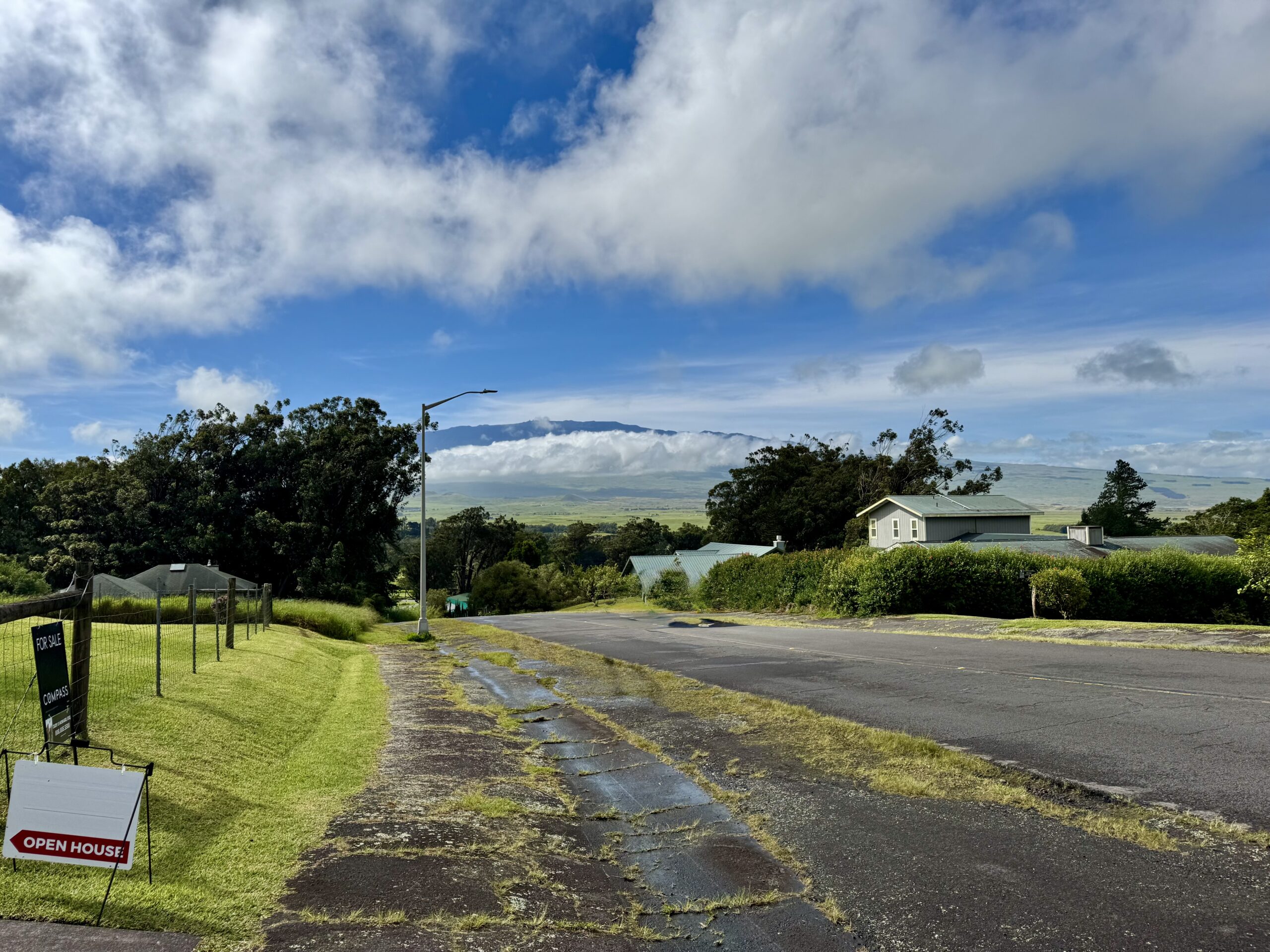
Waimea sits within South Kohala but tells a different story than the Kohala Coast resort market. While the coast is seeing average sales prices approaching $2M and heavy luxury activity, Waimea proper offers a much wider range — from entry-level homes in the $400,000s to ranches and estate properties well above $1M. Well-priced, well-presented homes in Waimea are moving. Properties that linger tend to do so for a reason — price, condition, or location. If you’re considering buying or selling in Waimea, now is a good time to have an honest conversation about what comparable sales are actually showing.
South Kohala
The broader South Kohala market — which includes the Kohala Coast resort communities of Waikoloa, Mauna Kea, and Mauna Lani — is showing strong numbers in 2026. Average sales prices rose to $1.99M, up 12% year-over-year, with total sales volume up 25%. Sales above $1M increased 17% year-over-year, reflecting continued strength in the luxury segment.
That said, the market is becoming more selective. Inventory is up approximately 15% compared to Q1 2025, days on market are increasing, and price reductions are appearing more frequently — a sign that buyers are becoming more disciplined and less willing to overpay for properties that don’t clearly justify their asking price. Sellers who price strategically and present their homes well are still getting results. Those who don’t are sitting.
Hamakua
The Hamakua Coast — Honoka’a, Paauilo, Laupahoehoe and the surrounding areas — is a small, relationship-driven market that doesn’t generate the same volume of data as the west side. There have been 20 sales so far this year, with a median sales price of $595,000. What I can tell you from direct experience is that Hamakua attracts a specific kind of buyer: people who value agricultural land, privacy, ocean views at elevation, and a genuine rural community feel. Properties here tend to stay on the market longer than the island average, but the right property finds the right buyer. If you’re considering Hamakua, patience and local knowledge matter more here than almost anywhere else on the island.
A Note on Other Markets
My practice is focused on Waimea, North Kohala, South Kohala, and Hamakua. If you’re interested in Kona, Hilo, Puna, or Ka’u, I’m happy to refer you to excellent agents in those areas who know their markets as well as I know mine. A good referral is worth more than a stretched relationship.
Sources: Locations Hawaiʻi, Coldwell Banker Island Properties, Hawaiʻi Life, and Maui Now. Figures marked ~ are estimates based on available monthly and quarterly data. This report covers resales of existing single-family homes only; new construction and condominium data are excluded. All data is deemed reliable but not guaranteed. This article is for general informational purposes only and does not constitute legal, financial, or investment advice.
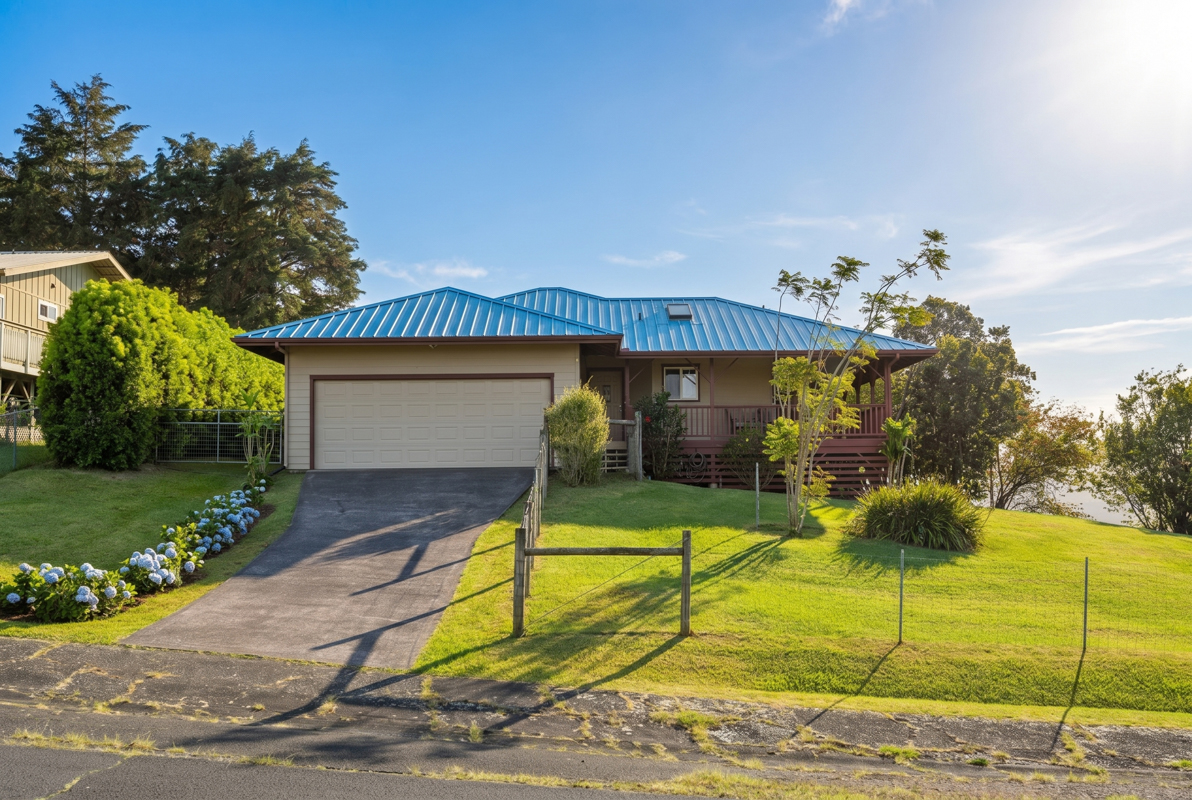
Featured image courtesy of Sarah Anderson. Judy S. Howard, Esq. is a Realtor Broker with COMPASS in Waimea, Hawaii, and a licensed Hawaii attorney with over 30 years of experience. She can be reached at judy@livinginwaimea.com or 808-885-5588.