Buying a Home in Waimea Under $1 Million: What You Need to Know Right Now

Last updated: April 2026. Market conditions change frequently — contact me for the most current information.

If you’ve been thinking about buying a home in Waimea, now might be a very good time to take a serious look.

What’s Available Right Now

There are currently four homes listed in Waimea under $1 million, ranging from $710,000 to $970,000. All four are show-ready and well-presented. These are not distressed properties or fixer-uppers — these are homes whose owners have done the right things to prepare for sale. The fact that some have been sitting on the market for anywhere from 41 to 125 days does not appear to be driven by any deficiency in the properties themselves, although one has tenants who are not always cooperative, and another has large and noisy dogs next door, but by mortgage rates and general economic uncertainty. Most have already seen at least one price reduction.

It’s worth noting that six properties in the $1M and under price range are currently in escrow and four have sold in the last 30 days — so the market is active. Buyers are buying — they’re just being selective.

You can view the current listings I’m referencing here: Waimea Town Single Family Homes $1M and Under

For buyers with cash or who can secure financing, this is an opportunity worth taking seriously.

Where Are These Homes?

All four are located east of Waimea town center. The east side of town gets more rainfall than the town center or the west side. If you love the sun, that’s worth knowing. On the other hand, the east side is less windy, less dusty, and carries significantly lower fire risk — which is not a small consideration on the Big Island. None of these homes are within walking distance of the town center, but all are easily accessible by car.

Why Waimea?

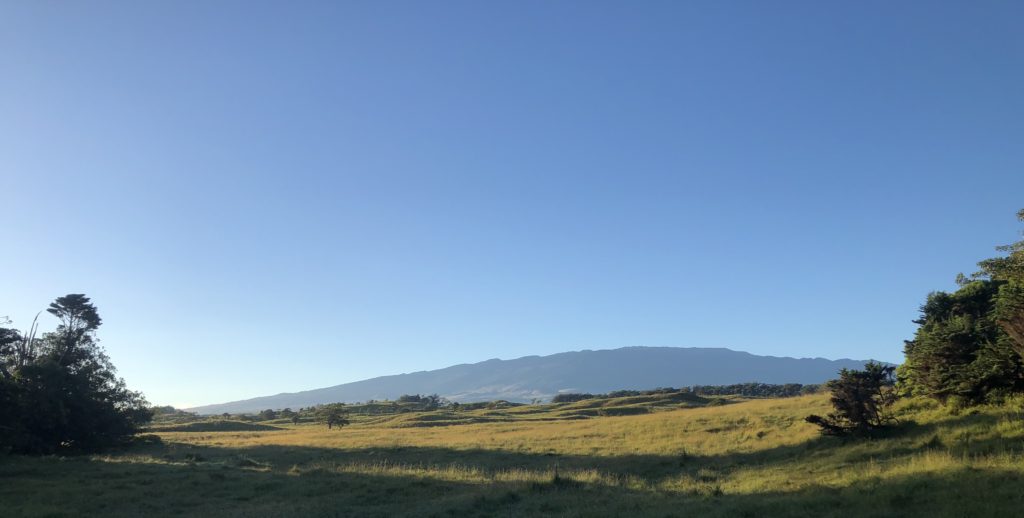
For those unfamiliar with Waimea, let me tell you why people love it. This is paniolo country!  A genuine Hawaiian ranch town, set among beautiful mountains with a cool, crisp climate that feels nothing like the rest of the island. It is home to two well-regarded private schools with strong records of sending graduates to top universities, as well as public elementary and intermediate schools and a very popular Hawaiian immersion charter school. It is the headquarters for the Keck and Canada-France-Hawaii observatories. It has a wonderful theater, and its restaurant scene is exceptional — known throughout the state for fresh, regional cuisine.

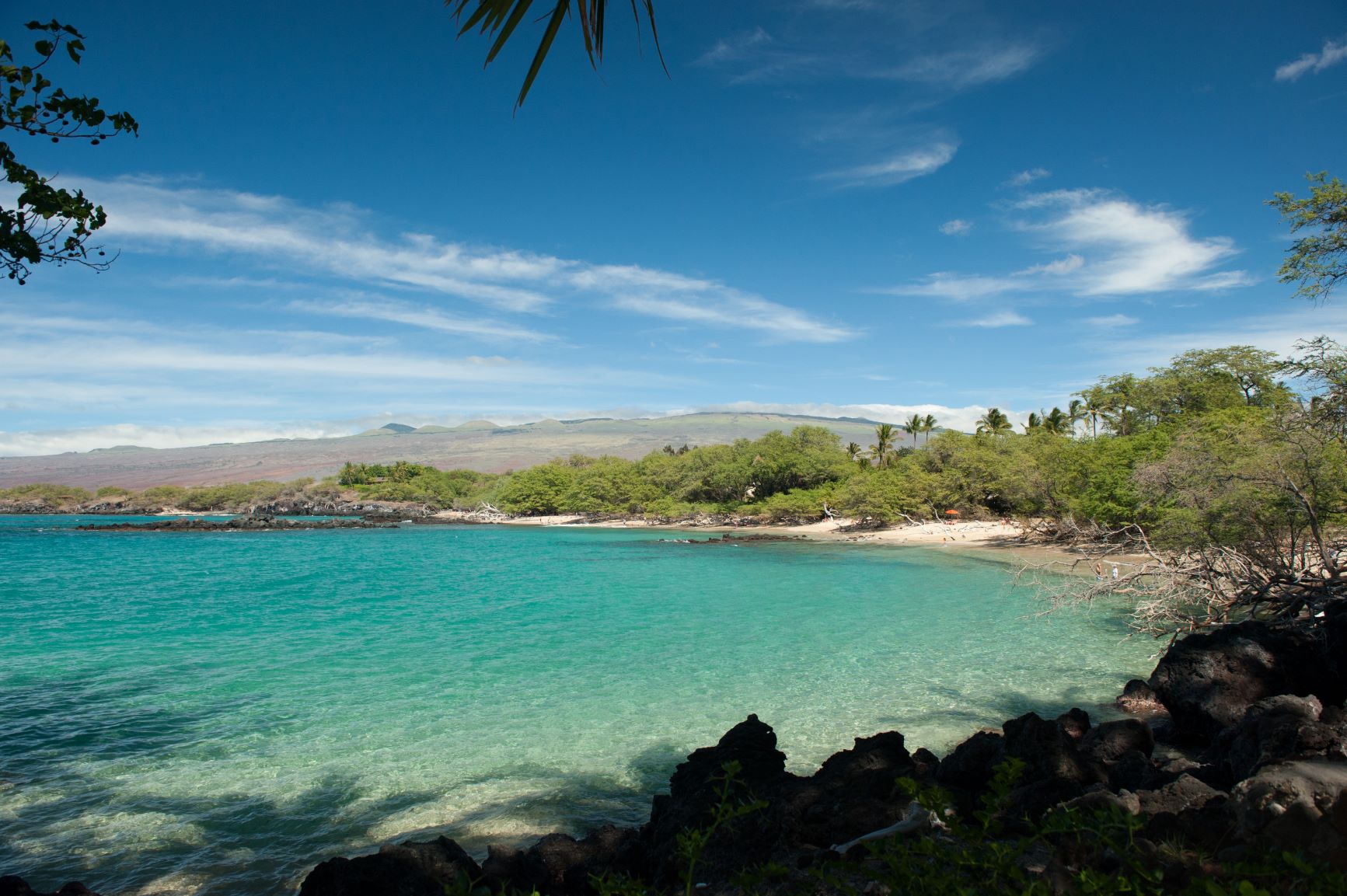
And it is just a short drive from some of the most beautiful beaches in the world.

Most people from Hawaii already know about Waimea and love it. For mainland buyers relocating to the Big Island, it often comes as a revelation.

Hawaii-Specific Things Buyers Should Know

Buying in Hawaii is not quite like buying anywhere else, and Waimea has its own specifics worth understanding.

County water:

All four current listings are on county water, which is straightforward and one less thing to worry about.

Cesspools:

Many older Waimea homes have cesspools rather than septic systems. The State of Hawaii has mandated that all cesspools be converted to septic systems by 2050. If you’re buying a home with a cesspool, factor eventual conversion costs into your thinking. It’s worth getting a ball park estimate during your due diligence period.

Fee simple ownership:

All current listings are fee simple, meaning you own the land outright. This is what most buyers prefer and expect, but it’s always worth confirming in Hawaii where leasehold properties do exist.

Lava zone:

Waimea sits in lava zone 8 or 9, which is the lowest risk category on the Big Island. This is not a concern for buyers in this area.

Property taxes:

Hawaii has relatively low property tax rates, but when you buy a new property you should be aware that qualifying for the homeowner exemption rate takes a little time. Budget for a potential bump in your property tax bill for the first year or so, and make a visit to the Real Property Tax office part of your due diligence process.

Is Now a Good Time to Buy?

In my professional opinion, yes — if you have the cash or can qualify for financing. Prices in this range are reasonable for what Waimea offers, the available homes are in excellent condition, and sellers have already demonstrated flexibility with price reductions. I can’t predict whether prices will go lower, but I can tell you that well-priced, move-in ready homes in Waimea don’t stay available forever.

If you’d like to talk through any of these properties or the buying process in general, I’d love to hear from you. And please check back for future updates as the market changes.

Judy S. Howard, Esq. is a Realtor Broker with COMPASS in Waimea, Hawaii, and a licensed Hawaii attorney with over 30 years of experience. She can be reached at judy@livinginwaimea.com or 808-885-5588. 

Photo voltaic In Hawaii

Photo Voltaic in Hawaii-no utility lines here!

Photo Voltaic in Hawaii? You have options!

Interested in photo voltaic in Hawaii? Hawaii is well situated for those wishing to turn the sun’s energy into electricity. Even if you chose to live in an area which is frequently cloudy-like my home-you can live a fairly normal life without being tied into the electrical grid. Or, if you live in a spot that is served by HELCO, the electric company, you may be able to tie into the grid. Here’s where to find more information about tying into the grid: https://www.hawaiielectriclight.com/products-and-services/customer-renewable-programs

Living off grid

I have been living off grid for over twenty years. The technology has improved a great deal in that time. I have a basic system, and an excellent photo voltaic technician, and the experience is almost invisible on most days. I don’t use as much power as some other households might consume, and every once in a while I am completely stumped when my system stops working, but I am happy living off grid

There are much fancier systems, in much fancier homes! Some seem as though they would require an electrical engineering degree (or an on-site technician) to keep working properly. I think that in any off-grid home, the occupant must have an interest in at least the general theory of how the various components operate.

Grid tie ins

HELCO has gone through several iterations of its grid-tie in program, with each becoming less generous than the previous one. I recently sold a small house in Luala’i, Waimea, that had 20 photo voltaic panels and a monthly utility bill of $22. That home had the benefit of an older contract with HELCO, and the occupants could use almost any conceivable amount of electricity and still not owe more than the base amount.

At times, HELCO suspends new contracts altogether. This seems silly, since Hawaii has set of goal of 100% clean energy by 2045 http://www.hawaiicleanenergyinitiative.org/

There is a plausible explanation, however. There was such a rush to photo voltaics that the remaining customers were left shouldering too great a share of the overhead costs. I don’t think the utility chose the best solution-discourage photo voltaic-but that is the path they have chosen.

Ready? Not so fast!

Many people dream of building a home in the middle of some gorgeous pasture, with views to the ocean and space to roam. Photo voltaic systems play a part in many of those dreams. Some think they might rent out cottages on the land to generate some additional income. Hawaii has recently clamped down on vacation rentals, see https://livinginwaimea.com/2019/03/30/hawaii-county-restricts-vacation-rentals/

There are also other restrictions on land use in agriculturally zoned areas, see https://livinginwaimea.com/2018/10/12/hawaii-county-agricultural-land-use-restrictions/

Photo voltaic in Hawaii, yes! Maybe with a few more draw backs than you would like, but it is definitely feasible in Hawaii. Generating income from vacation rentals on agricultural land, nope. Building multiple dwellings on agricultural land, almost certainly not. Getting the benefit of the very low assessed value on agricultural lands without actively engaging in an agricultural, probably not for long! The County audits use, and will change your property tax classification if it does not find agricultural use. See https://livinginwaimea.com/2019/03/29/kohala-ranch-property-taxes/

Moving to Hawaii. Will I be disappointed?

Waipio Valley camp fire. Photo by Sarah Anderson

What If I Don’t Love Living in Hawaii?

It’s a fair question — and an important one. Moving to Hawaii is expensive, logistically complex, and life-changing. Not everyone is happy here, and you owe it to yourself to do everything possible to make sure it’s the right move before you commit.

Visit Multiple Times and Stay as Long as You Can

Come more than once. Stay in different areas. The Big Island alone has dramatic differences between regions — Waimea’s cool ranch country feels nothing like Kona’s sunny leeward coast, which feels nothing like Hilo’s lush rainy east side. What suits one person perfectly drives another person away.

Finding places to stay has become more challenging since Hawaii County tightened vacation rental regulations in residential neighborhoods, but bed and breakfasts are still available and longer term rentals can sometimes be arranged. The investment of time and money to truly experience an area before buying there is always worth it.

The People May Surprise You

I hear this again and again from people who move here: it’s not just the place they fall in love with — it’s the people. Come with an open heart and treat the people you meet with genuine kindness and respect, and most will repay you with the aloha these islands are known for.

Do Your Research

Your realtor is a valuable source of information about what life here is really like day to day — not just the real estate transaction. The State of Hawaii also maintains a helpful newcomers guide.

And if you want the unvarnished truth about what to expect — healthcare, schools, cost of living, insurance, and more — read my longer post: What You Need to Know Before Moving to the Big Island.

Judy S. Howard, Esq. is a Realtor Broker with COMPASS in Waimea, Hawaii, and a licensed Hawaii attorney with over 30 years of experience. She can be reached at judy@livinginwaimea.com or 808-885-5588.
Hawaii County land use restrictions for agriculturally zoned land.

It is beautiful, but it is not for everyone!

Hawaii County is a place of great beauty and vast open spaces.  But it is also a place where the goals of food self-sufficiency and diversified and sustainable economic growth are taken seriously. At the moment, the County is heavily dependent on tourism, which leaves us in a precarious position when visitor numbers drop for any reason.  We also import an appalling percentage of our food, which leaves us vulnerable to vagaries of labor strikes and natural disasters.

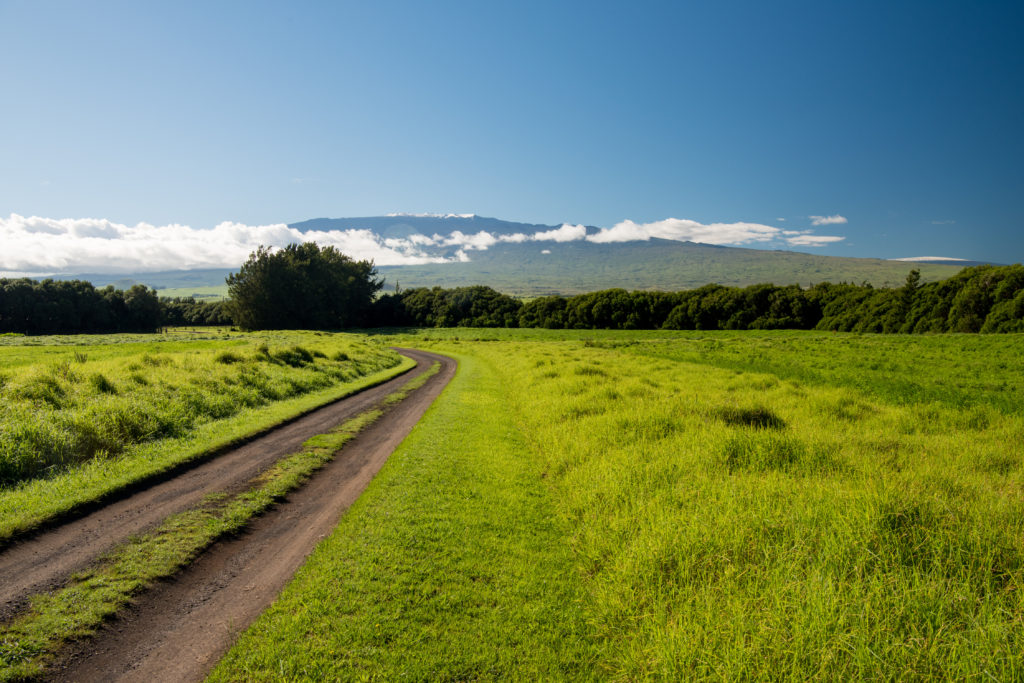
Land zoned for agricultural use, Hawaii County.
Hawaii County and the State restrict use of agriculturally zoned lands

Agricultural lands receive favorable tax treatment.

First and foremost, the property taxes on land in agriculture are much lower than those on land used for residential purposes.  The actual rate is higher for some agricultural land than it is for some residential land, but the assessed values to which those rates are applied results in significantly lower taxes.  Grazing land, in particular, is assessed at about $10,000/acre for non-dedicated land, and is currently taxed at $9.35/$1000.  Homeowner rates are currently $6.15/$1000 of assessed value, but the land and improvements are assessed at market value. Also, those low homeowner rates apply only to primary residences, not to second homes or homes held for income or investment.  Rates are available here: http://www.hawaiipropertytax.com/tax_rates.html

So what constitutes an agricultural use, and where is County land use policy headed?

You can access a handy chart showing the permissible uses of land zoned in various ways here: http://www.hiplanningdept.com/wp-content/uploads/2017/09/Permitted-Uses-Table-091917.pdf

Some of the uses listed in the chart don’t do much to increase food production.  There is obvious value in keeping land in agricultural use, in the sense that it is much easier to later convert open land to food production than it is to restore land that has been used for residential, commercial or industrial purposes so that it can be safely used for such production.  But given the growing emphasis the State is placing on a diversified economy and food self-sufficiency, it is reasonable to expect increasing restrictions on use of agriculturally productive land for purposes other than food production and commercial agriculture.  The days during which a developer could easily purchase a pasture, get it rezoned and subdivided, and build and sell houses, are gone.

Current restrictions on use of agriculturally zoned land.

Even now, the number of dwellings, and the type of occupants of dwellings, are restricted on some agricultural lands.  Some lands are governed by the State Land Use Commission, and lands classified as less productive are subject to County regulation.  This is a huge topic, and while I could post links to every source that would need to be consulted in order to make a determination as to the governing body and restrictions on a given parcel, I instead advise anyone considering a purchase of agriculturally zoned land in Hawaii County to consult with the Hawaii County Planning Department.  Have the TMK of the parcel you are considering, and a planner should be able to outline for you all of the permitted and prohibited uses for that land.  See also https://livinginwaimea.com/2019/03/29/kohala-ranch-property-taxes/

Don’t plan on paying for your agricultural land purchase by selling agricultural goods!

If you want to make a profit on agriculture in Hawaii, your options are even more limited.  Some crops do reasonably well in some years, but given the cost of land, it is very difficult to thrive as a farmer or rancher in Hawaii, year in and year out.  Nonetheless, there are quite a few ranchers and farmers here.  Why?  Because even though it is very hard work, it is also endlessly interesting and occasionally very rewarding!