What’s going on with Ag land in Hawaii

I don’t get the sense that policy-makers at the state or county level have a clear idea of what they’re trying to accomplish. Are they trying to maximize tax revenue, increase food security, or maybe do both at once? (good luck!)

The county of Hawaii has various real property tax rates for different types of property. Agricultural rates are higher than homeowner rates. Assessed values also depend upon the uses made of land. Within the agricultural classification, there are different and higher assessed values for intensive uses such as crop growth, compared to pasture. Assessed values for ag land are always below fair market value.

The county, or at least some council members, take the position that agricultural land owners are being “subsidized” by other real property tax payers. That has never made any sense to me. I pay homeowner rates on my home, and my pasture is assessed and taxed as agricultural land. Someone with a house that was their primary residence, on a 10,000 square foot lot, would pay less than I do, but would be likely to make the same or higher demands on public resources as I do.

If they’re trying to promote food security, the county should be granting the ag rate to anyone who is growing a food crop or raising animals for slaughter, or even just preserving the option to do so in the future, whether at a commercial level or for person consumption. But that is not the case. Instead, they are granting ag rates to people who grow ornamentals, which can’t be eaten but which are an excellent way to transporting pests from one area of the Big Island to another, or even farther.

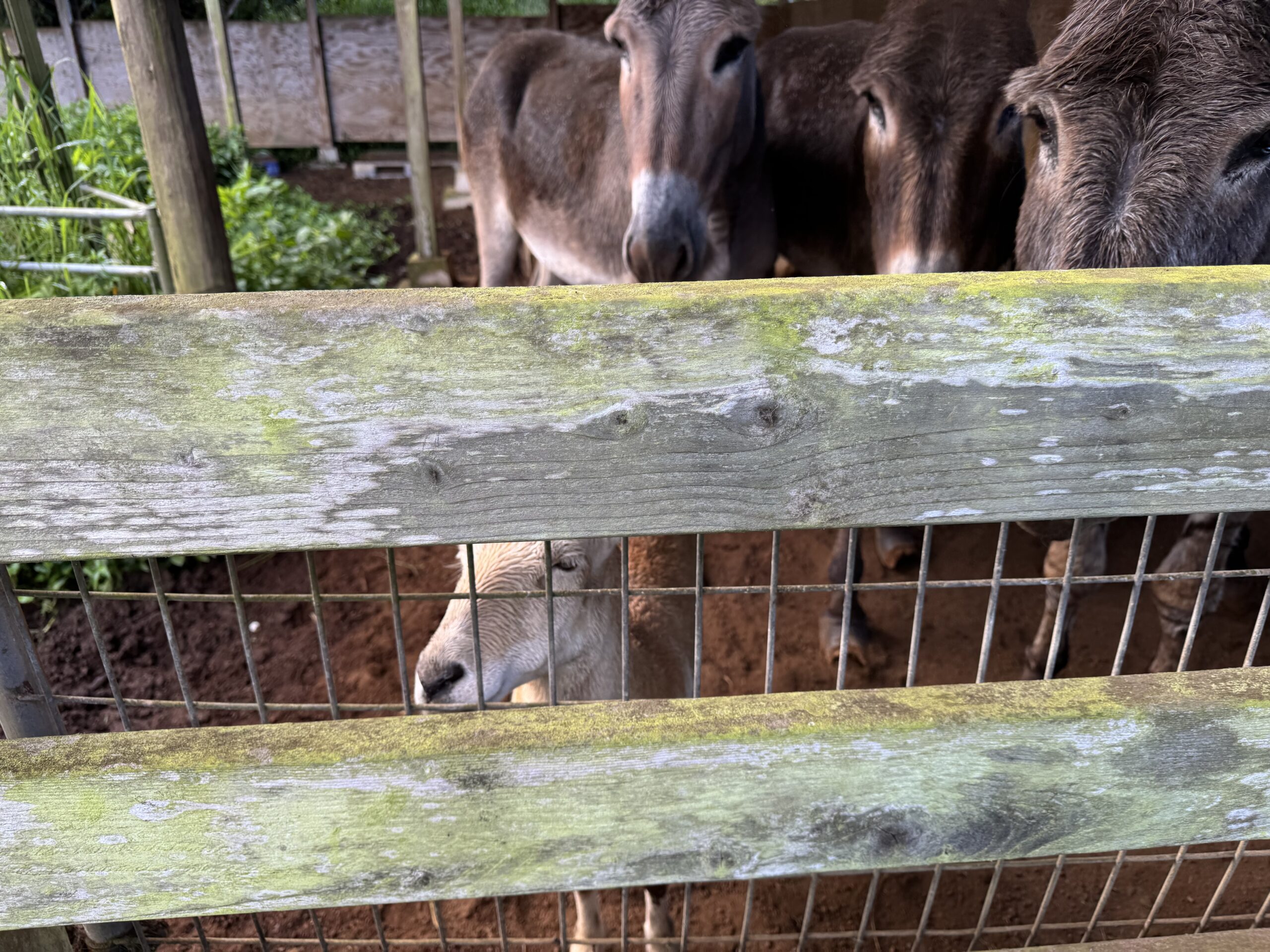
And there is more to agriculture than the production of crops or animals for human consumption. The Big Island is home to many ranches and horse trail rides. The horses get old. Is pasturing them, either while they’re working or after they’re retired, an agricultural use? It should be, but how does that fit in to the schemes being dreamed up?

At the state level, they seem equally confused about what they are trying to accomplish. They want to acknowledge that subsistence agriculture is a valid use of agricultural land, which is definitely a step in the right direction, but they seem to be stumbling around in the dark in terms of what they are trying to accomplish. Their as yet vague ideas are likely to require more paperwork from small land holders, more taxes to pay the salaries of civil servants who may not have any idea of what they are supposed to be looking for, and will almost certainly result in further consolidation of land holdings, as the small holders are unable to jump through the hoops set for them by misguided and ill informed politicians and bureaucrats. Frankly, rather than making sausage, as Tim Richards is quoted as saying, I’d prefer that the policy makers proceed with a clear understanding of the goals they wish to accomplish. All I see, again and again, is that the policy makers feel as though some land owners are “cheating” and should pay more.

Moving to Waimea? Here are 5 Things to Know Before You Do.

Living on the Big Island is unlike living anywhere else. Here are 5 things you should learn before deciding to move to Waimea, or anywhere else on the Big Island.

List of Items to Consider
List of Items to Consider Before Deciding To Move To The Big Island

So here they are. Not all apply to everyone, but they should all be considered for further research.

  • Learn what’s going on in the County and State governments that might change the area you’re thinking about. Subscribe to one of the local papers’ free email of headlines. West Hawaii Today and The Hilo Tribune are the two main papers on the Island. Civil Beat covers the State, and does an excellent job of reporting on the major issues we face. You can get a free email of headlines from any or all of them.
  • If you’re moving to the Waimea area, subscribe to the Waimea Community Association’s newsletter. If you have any interest in the history and culture of the town, I highly recommend the Paniolo Preservation Society’s newsletter, as well.
  • Health care is scarce around here. Primary care physicians are hard to find, and specialists usually come from Oahu, or require you to travel there to be seen. Some surgeons will see patients here, but require you to fly to Oahu for surgery. Investigate carefully, especially if you have any health issues that require frequent care!
  • Be very careful to look past the “headlines” when it comes to schools. I wrote about this in an earlier blog. Since then, my daughter, who graduated from Parker in 2016 and headed for Dartmouth, has come back home. I’ve had a chance to ask her what she thinks about the preparation she got at Parker. She says the academics at Dartmouth were no problem, although there were subjects that were completely new to her while many of the other students had taken AP classes in those subjects at their high schools. There just isn’t as much breadth of coverage at a smaller school. What really threw her, though, was the “culture”. She was not at all prepared for the cut throat social scene she found there. If your kid is set on an Ivy League school, at the very least, get them as much supplemental tutoring and course work as you can afford. It may mean you rarely see them, since much of the supplemental work will be at camps on the mainland, but they will be much more comfortable once they get to college.
  • Finally, if at all possible, figure out a way to stay in the areas you are interested in. Rentals are difficult to find, and usually require a lease term of at least 6 months. Vacation Rentals in residential areas are becoming sparse, as a result of the recent County ordinance, but bed and breakfasts are still allowed at this time. There are huge differences, even in Waimea, between the dry side and the wet side, and within different subdivisions. But perhaps Waikoloa would be a better fit, or Kona? Take the time, and spend the money, to figure it out before you buy.

These 5 things you should learn before deciding to move to Waimea are just a start, of course. Please feel free to reach out with questions. I’ll do my best to help!

How To Get the Healthcare You Need in Hawaii: 3 Tips to Consider Before You Move

blue and silver stetoscope
Photo by Pixabay on Pexels.com

Do you require frequent medical visits, specialists, and accessible treatment options? Before moving to Hawaii it is helpful to know your options and prepare for what’s covered by your insurance, what requires inter-Island travel, and alternative healthcare options.

Medical facilities and insurance coverage can be limited depending on where you live and waiting times vary depending on what care you need. There is a doctor shortage on the Big Island, and in Hawaii generally, and when it comes to specialist care (dermatologist, podiatrist, rheumatologist, neurologist, Mohs surgeon, etc.) it is common to drive long distances, fly to Oahu for care that’s covered by insurance, or to pay cash for services on the Big Island. 

Why Pay “Out-Of-Pocket”?

While cash pay sounds scary, so is paying a high insurance premium that doesn’t cover services you need. With rising insurance premiums, consider progressive ways healthcare clinics provide efficient and quality care with cash pay models. So, where do you start? 

First, know that there are wonderful traveling nurses, doctors, physician assistants, and specialists on the Island that provide excellent care. Some offer partial insurance reimbursement plans, yearly membership benefits, and virtual visits.

Some residents opt-out of traditional insurance and use catastrophic insurance with high deductibles and pay cash for specialized care. If you need traditional insurance coverage, start looking online here to check your options based on income.

Last Things to Consider

Do you require frequent checkups? Dental care, specialized visits, and will you live closer to Waimea, Kona, Waikoloa, or Hilo? Look into clinics nearby and what insurance or plans they take. In Hilo, one of my personal favorites is Mahinakealo Dermatology (because when you live in Hawaii, you need a Dermatology clinic). Marne Carmichael Walsh PA-C provides the most detailed and patient-focused care in the Hilo community. While Mahinakealo Dermatology offers reasonable cash pay options and reimbursements now, the office will take HMSA, HMAA, and UHA at the start of 2021. 

In Kona, Elite Smiles Dental has a discount program for individuals and families with a small yearly fee. In Waimea, Iris Integrative Health has successfully created an affordable subscription healthcare model clinic utilizing western and naturopathic medicine. 

There are three main hospitals in Hawaii: North Hawaii Community Hospital Queens Medical Center in Waimea, the Kona Community Hospital down South, and The Hilo Medical Center on the Eastside of the Island. Urgent care clinics are also commonly used for quick care and family medicine concerns. 

There are many factors involved, so be prepared to make shifts as you consider life on the Big Island. Many local residents are happy with the healthcare quality on Island, but it is best to know your options and avoid the frustration of having insurance that not all offices take because it is “out of network.” So, is there a clinic or doctor you go to on the Big Island? There are many more to mention, so be sure to share in the comments. 

Contact me Here to learn more about available listings and information about life on the Big Island of Hawaii.

The Unfortunate Truth About Living in a Melting Pot: Hawaii and Racism

Racism is alive and well in Hawaii. It just looks a little different that it does on the mainland. Quite a few years ago, a woman I had recently met exclaimed “Judy, they’re prejudiced against us!”

This woman was caucasian, from the western US. I guess she thought that if she could be magnanimous enough to overlook other people’s skin color, they should do the same for her? She lasted less than a year before moving back to the mainland.

The good old days.

I was born in Hawaii in 1954, and have lived here most of my life. There were Kill a Haole (caucsian) days at the public schools when I was growing up. The local kids would pelt our car with guavas when we drove through Hawaiian Home Lands. There were parts of Oahu where haoles were not safe. I was aware of the hostility, but it never really bothered me.

I’m pretty sure the private school I attended admitted only caucasians and Hawaiians when I was young (it’s a little foggy). I know my step father was the first president of one of the private clubs in Honolulu to successfully argue that admittance should not be limited to haoles.

Things had changed a little by the time I was in high school. There was a flourishing of Hawaiian language and culture, giving pride to many Hawaiians for the first time in generations. The music produced during that time was fantastic, and included a hilarious song by Keola and Kapono Beamer called Mr. Sun Cho Lee: https://youtu.be/kS2YLvGGtwY In it they made fun of many races, but in a gentle way. It concludes with the lines “one thing I wen notice bout this place, all us guys we tease da otha race, it’s amazing we can live in da same place”.

Not any better now.

Those were gentler times. As more and more people have moved to Hawaii, consuming more of the resources and trying to impose their values on the locals, resentments have grown. Life used to be easy, and now many locals are hard pressed to make a living. Many are working multiple jobs, and, as real estate prices rise, commuting to work for hours each day. When they do have a little time to relax, they are being crowded out of the places they used to love by throngs of tourists.

While most local people are gentle, fun loving, and generous, there are definitely people who hate haoles. I know several people in my town who will never acknowledge me, and I’m fine with that. I understand why some locals, and especially Hawaiians, despise haoles.

Here is an account from someone who spent time in Pahoa: https://www.theprofessionalhobo.com/racism/

And some follow up to comments to an article published in the New York Times about how people in Hawaii are less racist: https://www.nytimes.com/2019/07/10/opinion/hawaii-race-ethnicity.html?referringSource=articleShare

Be prepared to earn trust, or be isolated.

Racism is alive and well in Hawaii. Don’t expect to be given a free pass if you’re white. You need to prove that you are honest, humble, hard working, respectful and generous, or you will never be accepted by most locals. http://yrh.ewp.mybluehost.me/2019/07/25/the-hawaiian-people-and-their-culture-make-hawaii-a-unique-paradise/

There are certainly caucasian enclaves, and as long as you’re happy remaining in such an enclave, you may be happy here despite the hostility of many locals. But then, why live here?

Waimea’s Schools

Waimea’s schools are limited, which should not be surprising considering Waimea’s population size. They suit the average student well. There is a public elementary school, https://www.waimeaelementary.org, a public intermediate charter school, https://sites.google.com/a/wmpccs.org/wms/home, a Hawaiian immersion school that offers grades K-12, https://www.kalo.org, a private elementary school (Waimea Country School), https://waimeacountryschool.org, and Hawaii Preparatory Academy https://www.hpa.edu, and Parker School, https://www.parkerschoolhawaii.org, both private, both offering K-12.

I know of people whose children have attended the public schools and gone on to become doctors and veterinarians. I know more people whose children have attended the private schools and have gone to professional careers. The education necessary to get into top notch colleges and beyond is available, but I would not rank Waimea Schools as high in terms of educational opportunities.

Waimea can be, after all, a “windy, cold, little mountain town”, as one of my clients recently described it. While there are many people who find Waimea to be one of the most desirable places to live, it is a matter of individual taste. And, with respect to schools, focus on the “little”. Given the population of potential students we have to draw on, it should not be surprising that resources are limited and even the private schools can’t afford to be all that selective about who they admit, or that generous in what they offer.

I have a friend who has taught in Waimea schools for many years, who told me that kids with special needs are better off in the public school system. Exceptionally bright or ambitious kids are going to need supplemental educational opportunities to keep them engaged and on track to meet their targets, regardless of which school they attend.

As with most things, it pays to spend time digging deep to make sure Waimea is for you! http://yrh.ewp.mybluehost.me/2019/04/13/moving-to-hawaii-will-i-be-disappointed/