What’s going on with Ag land in Hawaii

I don’t get the sense that policy-makers at the state or county level have a clear idea of what they’re trying to accomplish. Are they trying to maximize tax revenue, increase food security, or maybe do both at once? (good luck!)

The county of Hawaii has various real property tax rates for different types of property. Agricultural rates are higher than homeowner rates. Assessed values also depend upon the uses made of land. Within the agricultural classification, there are different and higher assessed values for intensive uses such as crop growth, compared to pasture. Assessed values for ag land are always below fair market value.

The county, or at least some council members, take the position that agricultural land owners are being “subsidized” by other real property tax payers. That has never made any sense to me. I pay homeowner rates on my home, and my pasture is assessed and taxed as agricultural land. Someone with a house that was their primary residence, on a 10,000 square foot lot, would pay less than I do, but would be likely to make the same or higher demands on public resources as I do.

If they’re trying to promote food security, the county should be granting the ag rate to anyone who is growing a food crop or raising animals for slaughter, or even just preserving the option to do so in the future, whether at a commercial level or for person consumption. But that is not the case. Instead, they are granting ag rates to people who grow ornamentals, which can’t be eaten but which are an excellent way to transporting pests from one area of the Big Island to another, or even farther.

And there is more to agriculture than the production of crops or animals for human consumption. The Big Island is home to many ranches and horse trail rides. The horses get old. Is pasturing them, either while they’re working or after they’re retired, an agricultural use? It should be, but how does that fit in to the schemes being dreamed up?

At the state level, they seem equally confused about what they are trying to accomplish. They want to acknowledge that subsistence agriculture is a valid use of agricultural land, which is definitely a step in the right direction, but they seem to be stumbling around in the dark in terms of what they are trying to accomplish. Their as yet vague ideas are likely to require more paperwork from small land holders, more taxes to pay the salaries of civil servants who may not have any idea of what they are supposed to be looking for, and will almost certainly result in further consolidation of land holdings, as the small holders are unable to jump through the hoops set for them by misguided and ill informed politicians and bureaucrats. Frankly, rather than making sausage, as Tim Richards is quoted as saying, I’d prefer that the policy makers proceed with a clear understanding of the goals they wish to accomplish. All I see, again and again, is that the policy makers feel as though some land owners are “cheating” and should pay more.

How To Get the Healthcare You Need in Hawaii: 3 Tips to Consider Before You Move

blue and silver stetoscope
Photo by Pixabay on Pexels.com

Do you require frequent medical visits, specialists, and accessible treatment options? Before moving to Hawaii it is helpful to know your options and prepare for what’s covered by your insurance, what requires inter-Island travel, and alternative healthcare options.

Medical facilities and insurance coverage can be limited depending on where you live and waiting times vary depending on what care you need. There is a doctor shortage on the Big Island, and in Hawaii generally, and when it comes to specialist care (dermatologist, podiatrist, rheumatologist, neurologist, Mohs surgeon, etc.) it is common to drive long distances, fly to Oahu for care that’s covered by insurance, or to pay cash for services on the Big Island. 

Why Pay “Out-Of-Pocket”?

While cash pay sounds scary, so is paying a high insurance premium that doesn’t cover services you need. With rising insurance premiums, consider progressive ways healthcare clinics provide efficient and quality care with cash pay models. So, where do you start? 

First, know that there are wonderful traveling nurses, doctors, physician assistants, and specialists on the Island that provide excellent care. Some offer partial insurance reimbursement plans, yearly membership benefits, and virtual visits.

Some residents opt-out of traditional insurance and use catastrophic insurance with high deductibles and pay cash for specialized care. If you need traditional insurance coverage, start looking online here to check your options based on income.

Last Things to Consider

Do you require frequent checkups? Dental care, specialized visits, and will you live closer to Waimea, Kona, Waikoloa, or Hilo? Look into clinics nearby and what insurance or plans they take. In Hilo, one of my personal favorites is Mahinakealo Dermatology (because when you live in Hawaii, you need a Dermatology clinic). Marne Carmichael Walsh PA-C provides the most detailed and patient-focused care in the Hilo community. While Mahinakealo Dermatology offers reasonable cash pay options and reimbursements now, the office will take HMSA, HMAA, and UHA at the start of 2021. 

In Kona, Elite Smiles Dental has a discount program for individuals and families with a small yearly fee. In Waimea, Iris Integrative Health has successfully created an affordable subscription healthcare model clinic utilizing western and naturopathic medicine. 

There are three main hospitals in Hawaii: North Hawaii Community Hospital Queens Medical Center in Waimea, the Kona Community Hospital down South, and The Hilo Medical Center on the Eastside of the Island. Urgent care clinics are also commonly used for quick care and family medicine concerns. 

There are many factors involved, so be prepared to make shifts as you consider life on the Big Island. Many local residents are happy with the healthcare quality on Island, but it is best to know your options and avoid the frustration of having insurance that not all offices take because it is “out of network.” So, is there a clinic or doctor you go to on the Big Island? There are many more to mention, so be sure to share in the comments. 

Contact me Here to learn more about available listings and information about life on the Big Island of Hawaii.

Moving to Hawaii With Your Dog? Know the Risks About the Harmful Bufos Pest

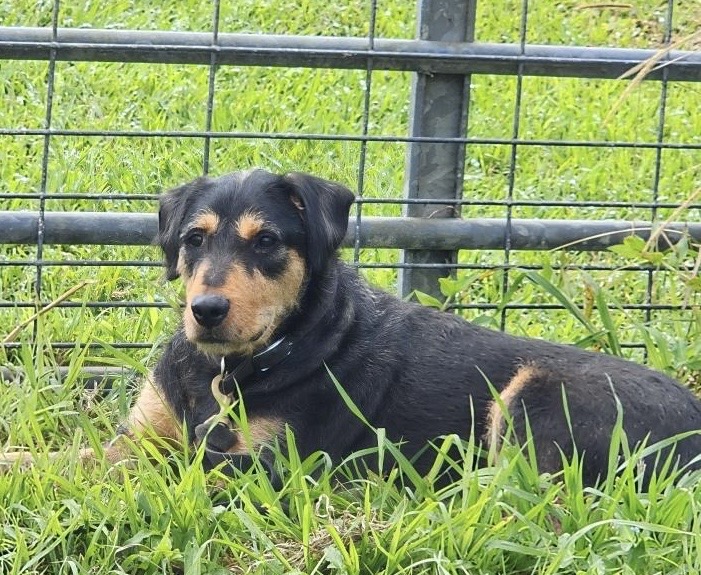
Many newcomers are unaware that bufos are dangerous pests in Hawaii. I was talking with a friend from Colorado today. I told her I had to get up many times last night because I had a dog that needed to go out. (The dog is fine, I’m very tired.)

She was surprised I couldn’t just let the dog out. In the wetter parts of Hawaii, we have a poisonous toad we call a bufo. Once dogs learn about them, they leave them alone. But you can lose a dog if it gets too much of the toxin in its system before it figures out not to bite them. https://ufwildlife.ifas.ufl.edu/frogs/canetoad.shtml

Bufos tend to hide in dark, moist places during the day, but come out at night. That’s why I always have my dogs on leash, and always have a headlight pointing right in front of the dog, if one needs to go out at night.

Of course it is possible that your pet will discover a bufo even during the day. They are very common in the wetter parts of Hawaii, day or night. But they tend to stay still unless disturbed during the day, so dogs don’t find them particularly interesting.

My vet told me years ago that the toads produce a neurotoxin from glands close to their skin. He said that if I saw a dog frothing at the mouth, I should immediately rinse its gums with as much running water as I possibly could.

Of course, you also want to get your dog to a vet, or a vet to your dog, asap. Since getting a vet to see a dog very quickly in the middle of the night is difficult, and rinsing out a dog’s mouth with jets of water is almost as difficult, I err on the side of caution! This is definitely an inconvenience, and counts as one of the disadvantages of living here. http://yrh.ewp.mybluehost.me/2019/08/06/the-pros-and-cons-of-living-on-the-big-island/

Bufos are common in many places in the US, as well as around the world. https://allthatsinteresting.com/bufo-toad

Photo voltaic In Hawaii

Photo Voltaic in Hawaii-no utility lines here!

Photo Voltaic in Hawaii? You have options!

Interested in photo voltaic in Hawaii? Hawaii is well situated for those wishing to turn the sun’s energy into electricity. Even if you chose to live in an area which is frequently cloudy-like my home-you can live a fairly normal life without being tied into the electrical grid. Or, if you live in a spot that is served by HELCO, the electric company, you may be able to tie into the grid. Here’s where to find more information about tying into the grid: https://www.hawaiielectriclight.com/products-and-services/customer-renewable-programs

Living off grid

I have been living off grid for over twenty years. The technology has improved a great deal in that time. I have a basic system, and an excellent photo voltaic technician, and the experience is almost invisible on most days. I don’t use as much power as some other households might consume, and every once in a while I am completely stumped when my system stops working, but I am happy living off grid

There are much fancier systems, in much fancier homes! Some seem as though they would require an electrical engineering degree (or an on-site technician) to keep working properly. I think that in any off-grid home, the occupant must have an interest in at least the general theory of how the various components operate.

Grid tie ins

HELCO has gone through several iterations of its grid-tie in program, with each becoming less generous than the previous one. I recently sold a small house in Luala’i, Waimea, that had 20 photo voltaic panels and a monthly utility bill of $22. That home had the benefit of an older contract with HELCO, and the occupants could use almost any conceivable amount of electricity and still not owe more than the base amount.

At times, HELCO suspends new contracts altogether. This seems silly, since Hawaii has set of goal of 100% clean energy by 2045 http://www.hawaiicleanenergyinitiative.org/

There is a plausible explanation, however. There was such a rush to photo voltaics that the remaining customers were left shouldering too great a share of the overhead costs. I don’t think the utility chose the best solution-discourage photo voltaic-but that is the path they have chosen.

Ready? Not so fast!

Many people dream of building a home in the middle of some gorgeous pasture, with views to the ocean and space to roam. Photo voltaic systems play a part in many of those dreams. Some think they might rent out cottages on the land to generate some additional income. Hawaii has recently clamped down on vacation rentals, see https://livinginwaimea.com/2019/03/30/hawaii-county-restricts-vacation-rentals/

There are also other restrictions on land use in agriculturally zoned areas, see https://livinginwaimea.com/2018/10/12/hawaii-county-agricultural-land-use-restrictions/

Photo voltaic in Hawaii, yes! Maybe with a few more draw backs than you would like, but it is definitely feasible in Hawaii. Generating income from vacation rentals on agricultural land, nope. Building multiple dwellings on agricultural land, almost certainly not. Getting the benefit of the very low assessed value on agricultural lands without actively engaging in an agricultural, probably not for long! The County audits use, and will change your property tax classification if it does not find agricultural use. See https://livinginwaimea.com/2019/03/29/kohala-ranch-property-taxes/

Hawaii County land use restrictions for agriculturally zoned land.

It is beautiful, but it is not for everyone!

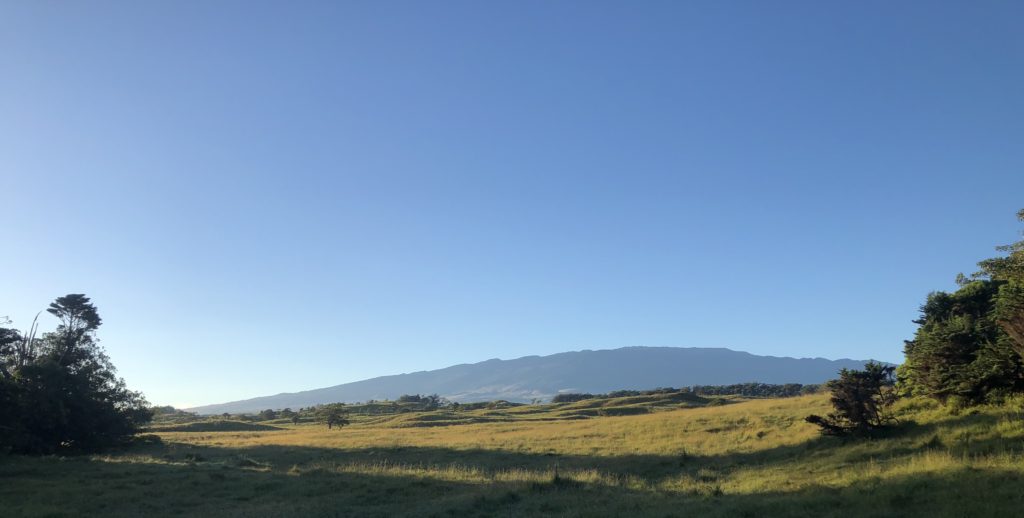
Hawaii County is a place of great beauty and vast open spaces.  But it is also a place where the goals of food self-sufficiency and diversified and sustainable economic growth are taken seriously. At the moment, the County is heavily dependent on tourism, which leaves us in a precarious position when visitor numbers drop for any reason.  We also import an appalling percentage of our food, which leaves us vulnerable to vagaries of labor strikes and natural disasters.

Land zoned for agricultural use, Hawaii County.
Hawaii County and the State restrict use of agriculturally zoned lands

Agricultural lands receive favorable tax treatment.

First and foremost, the property taxes on land in agriculture are much lower than those on land used for residential purposes.  The actual rate is higher for some agricultural land than it is for some residential land, but the assessed values to which those rates are applied results in significantly lower taxes.  Grazing land, in particular, is assessed at about $10,000/acre for non-dedicated land, and is currently taxed at $9.35/$1000.  Homeowner rates are currently $6.15/$1000 of assessed value, but the land and improvements are assessed at market value. Also, those low homeowner rates apply only to primary residences, not to second homes or homes held for income or investment.  Rates are available here: http://www.hawaiipropertytax.com/tax_rates.html

So what constitutes an agricultural use, and where is County land use policy headed?

You can access a handy chart showing the permissible uses of land zoned in various ways here: http://www.hiplanningdept.com/wp-content/uploads/2017/09/Permitted-Uses-Table-091917.pdf

Some of the uses listed in the chart don’t do much to increase food production.  There is obvious value in keeping land in agricultural use, in the sense that it is much easier to later convert open land to food production than it is to restore land that has been used for residential, commercial or industrial purposes so that it can be safely used for such production.  But given the growing emphasis the State is placing on a diversified economy and food self-sufficiency, it is reasonable to expect increasing restrictions on use of agriculturally productive land for purposes other than food production and commercial agriculture.  The days during which a developer could easily purchase a pasture, get it rezoned and subdivided, and build and sell houses, are gone.

Current restrictions on use of agriculturally zoned land.

Even now, the number of dwellings, and the type of occupants of dwellings, are restricted on some agricultural lands.  Some lands are governed by the State Land Use Commission, and lands classified as less productive are subject to County regulation.  This is a huge topic, and while I could post links to every source that would need to be consulted in order to make a determination as to the governing body and restrictions on a given parcel, I instead advise anyone considering a purchase of agriculturally zoned land in Hawaii County to consult with the Hawaii County Planning Department.  Have the TMK of the parcel you are considering, and a planner should be able to outline for you all of the permitted and prohibited uses for that land.  See also https://livinginwaimea.com/2019/03/29/kohala-ranch-property-taxes/

Don’t plan on paying for your agricultural land purchase by selling agricultural goods!

If you want to make a profit on agriculture in Hawaii, your options are even more limited.  Some crops do reasonably well in some years, but given the cost of land, it is very difficult to thrive as a farmer or rancher in Hawaii, year in and year out.  Nonetheless, there are quite a few ranchers and farmers here.  Why?  Because even though it is very hard work, it is also endlessly interesting and occasionally very rewarding!