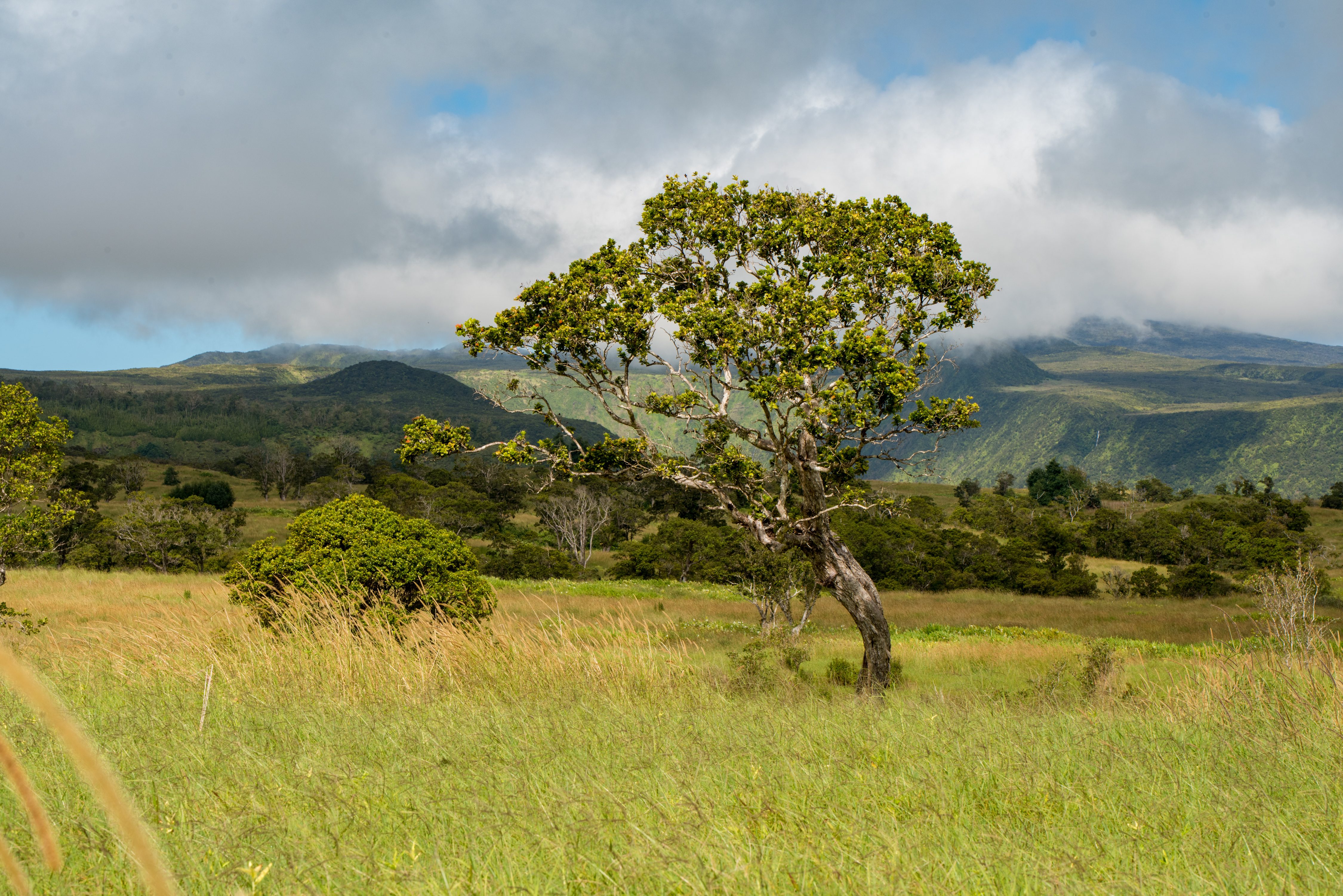
There’s a particular kind of buyer who comes to me wanting land in Waimea, or Kamuela as it’s known to the Post Office, and not a subdivision lot. They want pasture, elbow room, maybe a view of Mauna Kea with no neighbor’s roofline in the way. Often what they’re really picturing is off-grid living — and I understand the appeal better than most agents, because I’ve lived it myself. I’ve been on a 50-acre off-grid property near Waimea for the last 29 years, keeping horses and livestock the whole time.
Off-grid property can be some of the most rewarding land you’ll ever own. It can also be some of the most challenging. Before you fall for a listing with sweeping views and no power pole in sight, here’s what I make sure my clients understand.
“Off-Grid” Means Different Things on Different Parcels
Not every off-grid property is off-grid in the same way. Some parcels have no electrical service at all. Others have HELCO power but no county water. Some have neither, and some have both missing plus no cell signal. Before you get attached to a property, find out specifically what infrastructure is — and isn’t — already there, because that shapes your entire budget and timeline.
Water Is the First Question, Not an Afterthought
In much of the Waimea and Kohala uplands, there’s no county water line to tie into. That typically means one of two things: a private well, or a catchment system that collects and stores rainwater from your roof. Both work, and both have people living happily off them for decades. But both come with real considerations:
Catchment systems rely on adequate roof catchment area and tank storage sized to your household’s usage and to the dry months. A system sized for a weekend cabin won’t necessarily support a full-time household. One thing buyers often overlook: catchment water still needs to be pressurized to run through your house, and that takes a dedicated pump drawing real power. If you’re also off-grid on electricity, your solar and battery setup needs to be sized to handle that pump reliably, not just your lights and appliances. A pump that fails during a cloudy stretch means no water pressure at all, not just an inconvenience.
Wells require permitting and drilling costs that vary widely depending on depth to water, plus ongoing pump maintenance. But on this island, the bigger obstacle for many buyers isn’t the drilling itself, it’s finding someone to do it. There are only a handful of well drillers serving the Big Island, they tend to be booked out for months, and they’re not always easy to reach or quick to return calls. If a property needs a new well, budget for a long wait and plan to be patient and persistent just to get a driller on the phone.
Ask for maintenance records on any existing system, and don’t assume a catchment tank you see in listing photos is currently functional.
Power: Solar, Generator, or Both
Many off-grid Waimea properties run on solar with battery storage, sometimes backed up by a generator for cloudy stretches or heavy equipment use. When I’m reviewing a property with a buyer, I want to know the age and capacity of the solar array and batteries, not just that “solar is included.” A system that comfortably ran a previous owner’s simple household may not support your electric water pump, freezer, and home office setup. Battery banks in particular have a limited lifespan, and replacement isn’t cheap.
It’s also worth remembering how fast PV technology has moved. A solar setup that was impressive ten years ago is often modest by today’s standards. Panels are more efficient now, and battery technology in particular has improved dramatically. If you’re looking at a property with an older system, don’t assume it’s a selling point just because it’s there. Factor in that you may want to upgrade it, and price that into your offer.
Access Roads Matter More Than People Expect
Some of the most beautiful land in this area sits at the end of a private, unpaved road. That’s part of the charm, but it also means you should ask directly:
Is the road maintained by a road association, informally by neighbors, or not at all?
Is there a recorded easement, and does it clearly cover your parcel?
What does the road look like after heavy rain?
I’ve seen deals get complicated over easement language that was vague or simply never recorded properly. This is exactly the kind of issue where having an agent with legal training on your side pays off — I read these documents the way an attorney would, because I am one.
One more thing worth checking before you fall in love with a remote parcel: its wildfire risk zone. I go into this in more detail in my post on fire risk for Big Island buyers, but it’s especially relevant for off-grid land, where access roads can double as the only evacuation route.
Septic Systems and County Requirements
Off-grid doesn’t mean off the county’s radar when it comes to wastewater. You’ll still need an approved septic or aerobic system, and I always recommend a full septic inspection as part of due diligence, not just a visual check that a system exists.
Financing Looks Different for Off-Grid Land
This is the part that surprises many buyers. Conventional lenders can be hesitant about properties without connected utilities, and appraisals can take longer when there’s no easy comparable nearby. Cash purchases are common in this segment, and buyers who do finance often need a lender experienced with rural or agricultural properties. It’s worth having this conversation early, well before you write an offer, so financing doesn’t become the surprise that unravels your closing.
Zoning and What You’re Actually Allowed to Do
Many off-grid parcels here carry agricultural zoning, which affects what you can build, whether you can subdivide down the road, and sometimes what farm-related activity is expected on the land. I’ll touch on ag zoning in more depth in a future post, but it’s worth raising now: don’t assume “off-grid” and “agricultural” mean the same regulatory thing, or that either one gives you unlimited flexibility.
My Bottom Line
None of this is meant to talk you out of off-grid living — I’ve built a life on it for almost three decades, and for the right buyer, there’s nothing better. But going in with clear eyes about water, power, access, septic, and financing will save you from expensive surprises later. If you’re considering off-grid property in Waimea, North Kohala, or Hamakua, I’d be glad to walk the land with you and help you ask the right questions before you fall in love with a view.
If you’re still weighing whether Waimea is the right fit before narrowing in on off-grid specifically, my post on what to know before moving here is a good starting point.
Judy S. Howard, Esq. is an Associate Broker (RB-23241) with Compass in Waimea, Hawaii, and a licensed Hawaii attorney. She has lived off-grid near Waimea for 29 years. Photo by Sarah Anderson